Tiger Barb
Tiger barbs (Puntigrus tetrazona) are popular, active, schooling freshwater fish known for their striped, torpedo-shaped bodies. They come in several color variations�commonly regular, albino, and green�as well as long-finned varieties, and are often kept in groups of at least 6-10 to manage their semi-aggressive, fin-nipping behavior
Basic Information
Identification & Characteristics
Identification
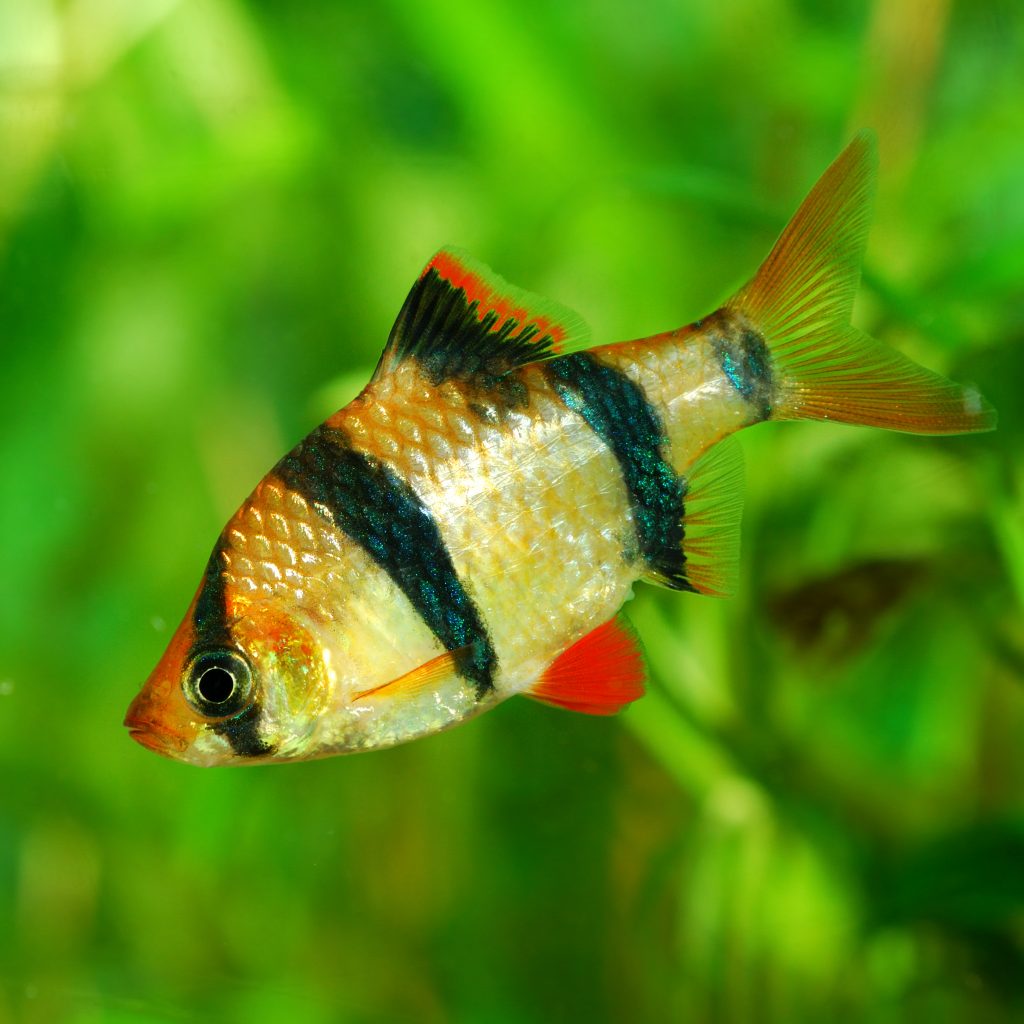
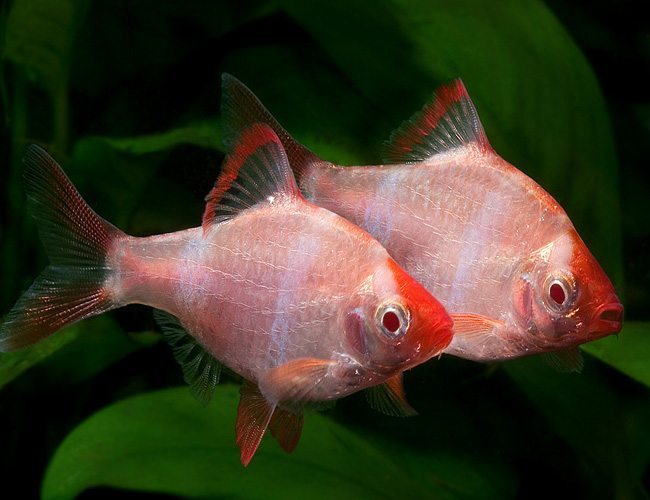
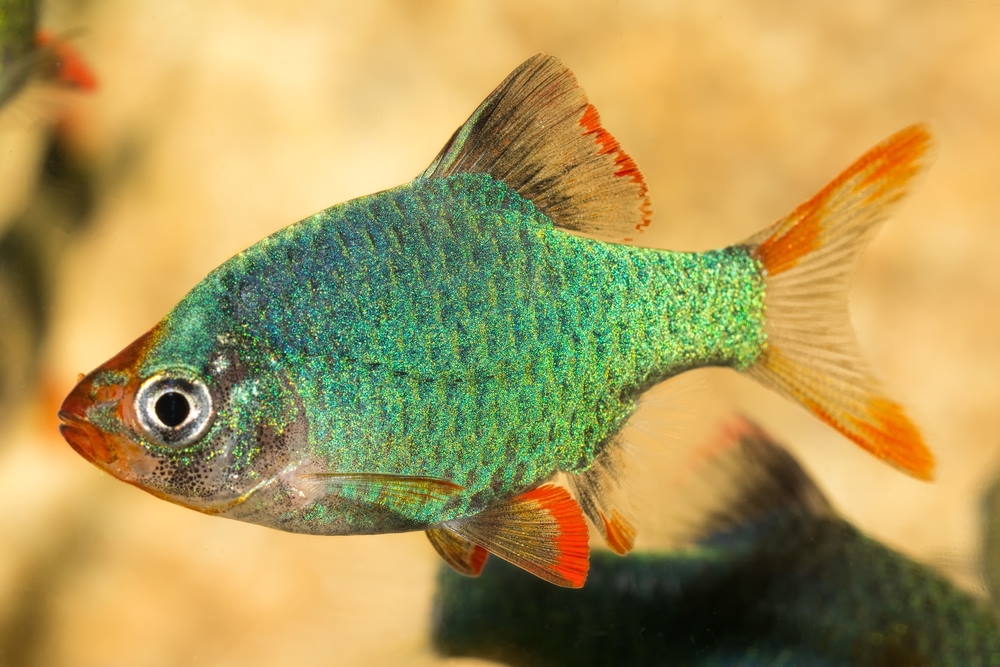
Tiger barbs come in three different colour varieties, the regular has a red to yellow body with 4 vertical black stripes, the Albino is yellow in colour with subtle white stripes and red fins, and the Moss Green has a green body with red and black finnage � the deepness of the green varies from fish to fish. Four black color horizontais strips in body.
Sexual Dimorphism
While often described as poorly marked, adult tiger barbs show distinct differences, especially during the breeding season:
Males: Generally smaller and slimmer with more, intense coloration. They typically develop a bright red snout and more vibrant red on their dorsal, ventral, and caudal fins.
Females: Usually larger and more robust with a rounder, fuller belly, particularly when carrying eggs. Their coloration is typically more muted compared to males
Behaviour Details
Aggression: Known as notorious fin-nippers, they often target slow-moving or long-finned fishlike Bettas or Angelfish. Keeping them in a large enough school often directs this energy toward their own kind. Activity Level: They are extremely active, c
Water Parameters
Reproduction
Spawning Style: They are egg-scatterers that provide no parental care. A single female can lay 300 to 500 eggs per spawning session.
Inducing Spawning: Often occurs at dawn; spawning can be induced by introducing plants (like Hydrilla or Java moss) which serve as egg collectors.
Egg Eating: Parents are known to eat their own eggs immediately after spawning, so they should be removed from the breeding tank once the process is complete.
Hatching: Eggs typically hatch within 24 to 48 hours, and fry become free-swimming after approximately 5 days.
Distribution & Origin
Native Origin
Native Range: Tiger barbs are indigenous to the freshwater wetlands and tree-lined rivers of Indonesia (specifically Borneo and Sumatra), Malaysia, Thailand, and Cambodia. Natural Habitat: They inhabit quiet, often shallow streams and tributaries with substrates consisting of sand, rocks, and thick vegetation.
World Distribution
Introduced Populations: Due to aquarium releases, they have established non-native populations in countries like Singapore, Australia, Colombia, and several U.S. states including Florida, Texas, and California.
Photo Gallery